
Anti Wrinkle Injections
Anti-wrinkle injections are a non-surgical treatment that temporarily relaxes facial muscles to soften fine lines and dynamic wrinkles caused by repeated expressions like frowning, squinting, and raising your brows. A certified cosmetic physician can assess your needs and create a personalised treatment plan.
The primary use of anti-wrinkle treatments is to reduce fine lines, frown lines, forehead wrinkles, and bunny lines that form due to repeated facial expressions, also known as “dynamic lines”. Over time, these expressions contribute to the breakdown of collagen, which leads to deeper creases on the face, particularly around the brow and forehead.
These injections work by interrupting the communication between nerves and facial muscles, preventing excessive movement that causes wrinkles to become more pronounced. By temporarily relaxing the muscles, anti wrinkle treatments help smooth the skin and soften the appearance of fine lines and creases. Results from these anti-wrinkle treatments typically begin to appear within a few days, with full effects visible in about ten days.
The benefits usually last between 3-4 months before a follow-up anti-aging treatment may be necessary to maintain smoother skin and prevent new creases from deepening.
Used for a number of cosmetic and medical concerns
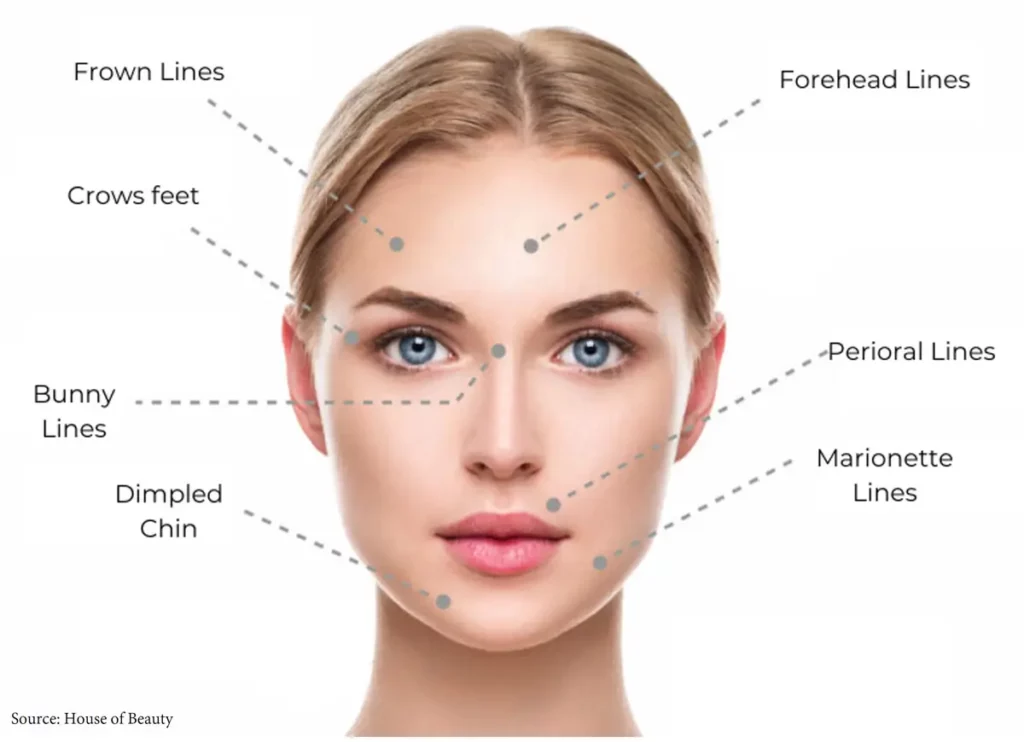
Anti-wrinkle injections are applied in a range of contexts involving muscular activity and facial expression. They are most often used to reduce frown lines between the eyebrows, lines that occur with smiling (commonly called crow’s feet), and transverse forehead wrinkles.
They may also be used to address a gummy smile, perioral creases, sometimes referred to as smoker’s lines, and downward turning at the corners of the mouth.
In addition to cosmetic purposes, these injections have clinical applications, including the management of hyperhidrosis (excessive sweating), reduction of masseter muscle activity to modify the jawline, and treatment of bruxism or involuntary jaw clenching.

Anti wrinkle injections across different brands
Multiple formulations of botulinum toxin type A are available in Australia for therapeutic and aesthetic use. These products are manufactured differently and their unit measurements vary, but their fundamental mechanism of action is the same.
Each works by temporarily blocking the release of acetylcholine at the neuromuscular junction, which reduces muscle contraction and softens the appearance of lines formed by repeated expression.
Although the numerical dosing is not identical between brands, published evidence indicates that the time to visible effect is generally a few days, with maximum change observed at around ten days. The benefits typically last for three to four months before muscle activity gradually returns.
When the correct dose is calculated, the different approved products are expected to work in a similar way.
Every face is different: treatment planning
The use of anti-wrinkle injections requires individual assessment. Facial muscles vary in size, strength, and movement patterns, which influence the type and depth of expression lines.
For some patients, frown activity is more prominent, while others show increased movement around the eyes or across the forehead. Sex-related variation in muscle mass also affects the quantity of product required, with men often needing higher doses than women.
Because of these differences, there is no universal formula for treatment. A detailed medical history and physical examination are essential to determine appropriate dosing and placement so that lines are reduced while natural facial expression is maintained.
Anti wrinkle injection safety and regulatory framework
Side effects from anti-wrinkle injections are possible, but they are not common.
The most frequent short-term reactions include mild bruising or swelling at the injection site. In some cases, if the product moves into nearby muscles, it can sometimes cause short-term changes like a drooping eyelid or an uneven smile, but these effects usually fade on their own.
In Australia, anti-wrinkle injections and dermal fillers are regulated as prescription-only medicines. By law, they must be prescribed to an individual for a specific treatment by a registered medical practitioner.
The doctor performs the clinical assessment and determines the dosage and sites of administration, and may delegate the procedure to a suitably trained nurse working under their supervision.
For patient safety, the Cosmetic Physicians College of Australasia (CPCA) advises that treatment should always follow a face-to-face consultation with an appropriately qualified doctor.
Please contact us by completing the enquiry form below
Frequently asked questions about anti wrinkle injections
What are anti-wrinkle injections?
Anti-wrinkle injections are a non-surgical treatment that temporarily reduces dynamic wrinkles by relaxing targeted facial muscles. They contain botulinum toxin, which blocks nerve signals to the muscles, preventing excessive movement. Botulinum toxin type A (BoNT-A), has been extensively studied for its effectiveness in reducing facial wrinkles.
A comprehensive review highlighted that these injections can result in up to an 80% reduction in wrinkle visibility within just one week. The treatment works by blocking the SNARE protein complex, which stops nerve signals from reaching the muscle for a short time and reduces wrinkle formation.
These injections are commonly used in cosmetic medicine to smooth lines and wrinkles caused by repeated facial expressions, such as frowning, squinting, or raising the eyebrows.
In addition to cosmetic applications, anti-wrinkle injections also have medical uses, such as treating muscle spasms, chronic migraines, and excessive sweating (hyperhidrosis).
How do anti-wrinkle injections work?
The active ingredient, botulinum toxin, temporarily prevents the release of acetylcholine, a neurotransmitter responsible for muscle contractions.
When injected into specific muscles, it reduces their ability to contract forcefully, softening the appearance of wrinkles. The effect is localised, meaning only the treated muscles are affected while untreated muscles continue to function normally.
This selective targeting enables a natural-looking result, where facial expressions are preserved rather than appearing “frozen”. Proper dosing and injection placement are essential to achieving a balanced and aesthetically pleasing outcome, which is why trained medical professionals should always perform these procedures.
How long do anti-wrinkle injections last?
The effects typically last between 3 to 4 months, though this can vary depending on the patient’s metabolism, muscle strength, and lifestyle. Some patients may notice results wearing off after 2.5 months, while others may retain effects for up to 6 months.
Factors that influence longevity include:
- Metabolism – Individuals with faster metabolic rates may break down the toxin more quickly.
- Muscle strength – Stronger facial muscles may require higher doses and more frequent treatments.
- Dosage and treatment history – Regular treatments can lead to longer-lasting effects as muscles adapt to reduced movement.
- Lifestyle choices – Intense exercise, smoking, and frequent sun exposure may reduce the duration of results.
For patients looking to maintain results, regular follow-up treatments are recommended before full muscle movement returns.
Are anti-wrinkle injections safe?
Yes, when performed by a trained and qualified medical professional, anti-wrinkle injections are considered safe and effective. The procedure has been extensively studied and approved for both cosmetic and medical use worldwide.
While anti-wrinkle injections using botulinum toxin type A (BoNT-A) are generally considered safe, it’s essential to be aware of potential side effects.
A systematic review and meta-analysis focusing on facial rejuvenation treatments identified several adverse events associated with BoNT-A injections.
The most common issues reported were headaches (5.4%), injection site reactions such as bruising or pain (3%), and ptosis (eyelid drooping) (2.5%). Less frequent but notable complications included muscle weakness and dysphagia (difficulty swallowing).
Understanding these risks is crucial for both practitioners and patients considering such treatments. However, as with any medical procedure, there are potential risks and side effects.
Common mild side effects include redness, swelling, or bruising at the injection site, which typically resolve within a few hours to days. Temporary headache or mild discomfort post-treatment. Minor asymmetry if one side of the muscle responds differently to treatment.
Rare but serious complications include:
- Drooping eyelids (ptosis) if the toxin spreads to unintended muscles.
- Flu-like symptoms in very rare cases.
These risks can be minimised by ensuring that treatments are performed by qualified professionals with a deep understanding of facial anatomy.
CPCA offers a registrar training programme in cosmetic medicine so that physicians can administer anti-wrinkle injections safely and effectively.
These risks can be minimised by ensuring that treatments are performed by qualified professionals with a deep understanding of facial anatomy. CPCA offers a registrar training programme in cosmetic medicine so that physicians can administer anti-wrinkle injections safely and effectively.
Who is qualified to perform anti-wrinkle injections?
Only licensed medical professionals should administer anti-wrinkle injections. This includes:
- Doctors (GPs, dermatologists, cosmetic physicians, and plastic surgeons)
- Nurse practitioners (under medical supervision, depending on regulations)
Medical professionals should have extensive training in injection techniques, patient assessment, and complication management. CPCA provides certification, educational programmes, and short courses for practitioners to meet industry standards and uphold patient safety.
What areas can be treated with anti-wrinkle injections?
Anti-wrinkle injections are commonly used for facial rejuvenation but also have several medical applications. Common treatment areas include:
Cosmetic Uses:
- Forehead lines – Horizontal wrinkles from raising the eyebrows.
- Frown lines (glabellar lines) – Vertical lines between the eyebrows, often called “11 lines.”
- Crow’s feet – Fine lines around the outer corners of the eyes caused by smiling or squinting.
- Bunny lines – Wrinkles on the nose from scrunching or laughing.
- Lip lines (smoker’s lines) – Vertical wrinkles around the mouth.
- Masseter muscle (jawline slimming) – Reduces jaw tension and creates a more tapered facial appearance.
Medical Uses:
- Hyperhidrosis (excessive sweating) – Injections in the underarms, palms, or feet reduce sweat production.
- Bruxism (teeth grinding) – Treating the masseter muscle can reduce jaw tension and discomfort.
- Migraine treatment – FDA-approved for chronic migraines, with injections targeting specific areas of the head and neck.
How soon will I see results?
Results do not appear immediately. The effects of anti-wrinkle injections typically begin to show within 2 to 3 days, but full results take 10 to 14 days to develop. This delay happens because the botulinum toxin gradually blocks nerve signals, requiring time to take full effect.
Patients should avoid assessing results too soon and should wait at least two weeks before considering additional adjustments. Follow-up appointments can help refine results if necessary.
What should patients avoid after the treatment?
To maximise results and minimise complications, patients should follow these aftercare guidelines:
- Avoid touching, rubbing, or massaging the treated area for at least 24 hours.
- Do not lie down or bend over excessively for 4 hours post-treatment to prevent the toxin from spreading.
- Refrain from intense exercise for 24 hours, as increased blood flow can reduce effectiveness.
- Avoid alcohol and excessive sun exposure for at least 24 hours to minimise swelling and bruising.
- Stay upright for several hours post-treatment for optimal toxin absorption.
Can anti-wrinkle injections be combined with other treatments?
Yes, anti-wrinkle injections are often combined with other cosmetic procedures to achieve a more comprehensive facial rejuvenation.
Common combination treatments include:
- Dermal fillers – To restore lost volume and enhance facial contours.
- Laser skin treatments – To improve skin texture and reduce pigmentation.
- Chemical peels – To promote skin renewal and enhance overall results.
- Microneedling or PRP therapy – To boost collagen production and skin quality.
A customised treatment plan ensures that each patient receives the most appropriate combination of treatments based on their needs and aesthetic goals.
Where can physicians receive training in anti-wrinkle injections?
The Cosmetic Physicians College of Australia (CPCA) offers a Graduate Certificate in Cosmetic Medicine, which provides in-depth training in anti-wrinkle injections and other cosmetic procedures. This course is designed for medical professionals seeking to expand their expertise in aesthetic medicine while ensuring the highest safety and ethical standards.
CPCA members gain access to:
- Hands-on training with experienced instructors.
- Evidence-based education on facial anatomy and injection techniques.
- Networking opportunities with leading cosmetic physicians.
- Ongoing professional development to stay updated on the latest advancements.
For physicians looking to advance their careers in cosmetic medicine, CPCA provides the necessary education and support to ensure excellence in practise.