Cryolipolysis
Cryolipolysis is a non-surgical treatment that reduces fat by freezing fat cells. It’s designed for people who are close to their goal weight but want to target specific areas like the stomach, thighs, or chin. While it’s considered low-risk, results take time, and more than one session may be needed. A proper consultation helps determine whether this method is right for your goals and your body.
At some point during our teenage years, the number of fat cells in our bodies becomes fixed. Losing or gaining weight generally does not increase or decrease the number of fat cells. Instead, it changes the size of fat cells.
Years ago, scientists at Harvard University observed that some children who ate popsicles got dimples in their cheeks. The scientists, Dieter Manstein, MD and R. Rox Anderson, MD, realised that the popsicles were freezing and eliminating small pockets of fat cells.
The idea that cold can target fat cells without damaging the skin or surrounding tissue was the inspiration behind cryolipolysis treatments to freeze and eliminate stubborn body fat.
What is cryolipolysis?
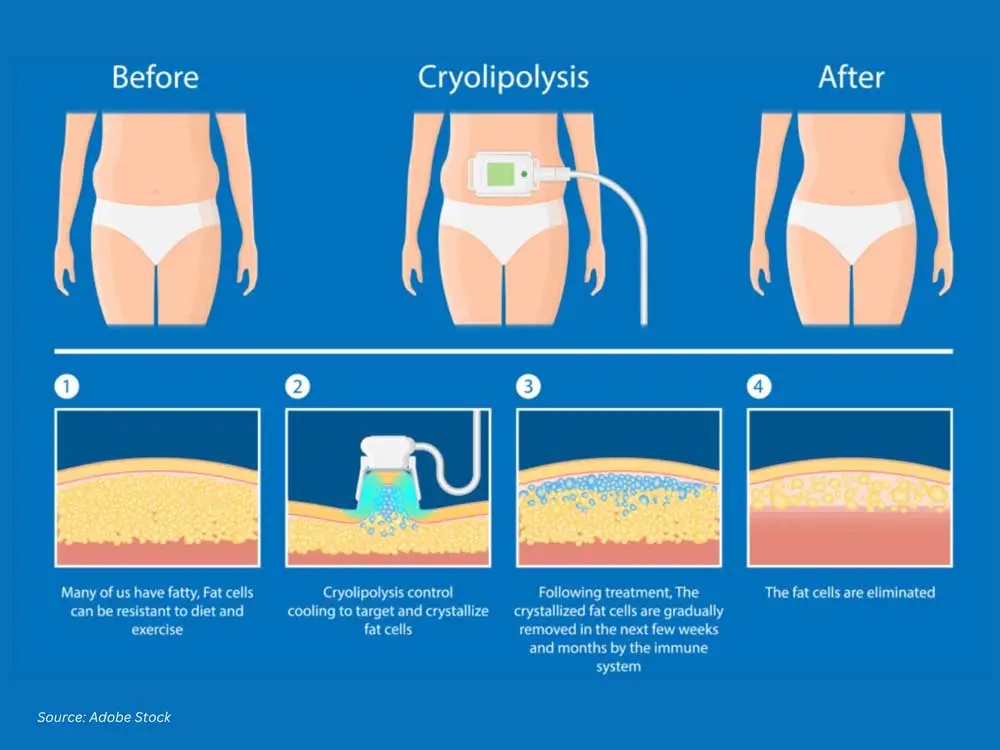
Cryolipolysis, or fat freezing, is a non-invasive technique for nonsurgical fat reduction. It works by exposing subcutaneous fat to a controlled cold temperature. Then, it selectively damages fat cells in the targeted area without harming surrounding tissue. This process causes the injured fat cells to undergo apoptosis, which is gradually cleared by the lymphatic system. This treatment is for body contouring or body sculpting. It is particularly effective at treating stubborn pockets of fat that are resistant to diet and exercise, such as belly fat, flanks, and thighs.
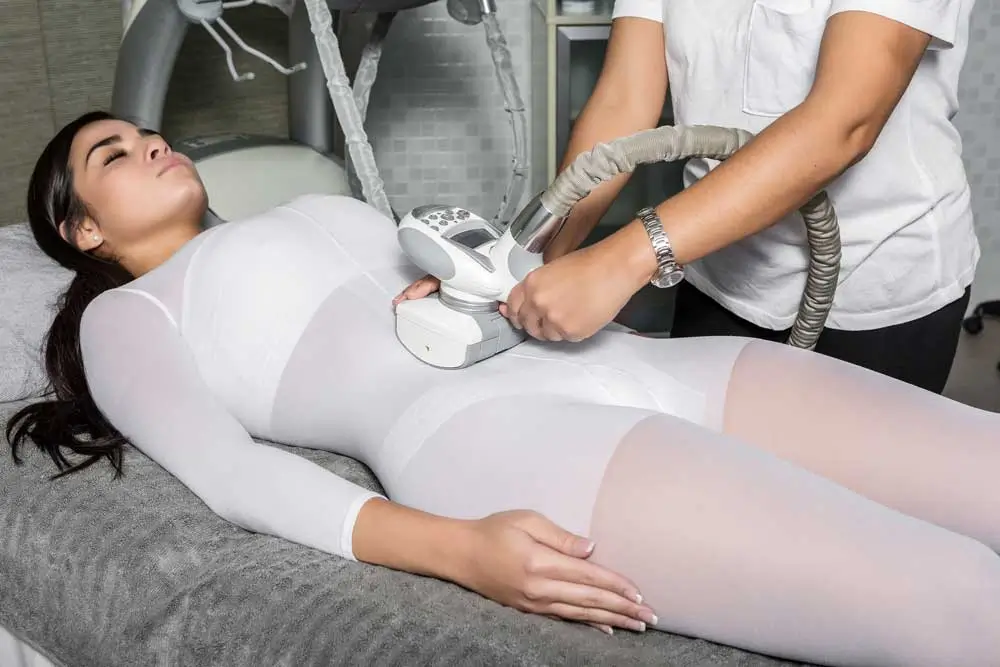
How does cryolipolysis work?
The cryolipolysis procedure delivers precisely controlled application of cooling within the temperature range of +5 to -11 °C to gently and productively target the fat cells underneath the skin, without apparent damage to the overlying skin.
The cooling process brings the fat layer to a freezing temperature, causing the fat cells in the treatment area to crystallise and die. These dead fat cells are then gradually eliminated through the lymphatic system, leading to a gradual fat loss in the treated region. Untreated areas on the body will have no change in fat cell distribution.
The method has a low rate of complications and is deemed to be low-risk. Studies indicate that this method can decrease fat in treated areas by approximately 10% to 25% per session.
In fact, one large retrospective study involving over 230 patients showed an average fat layer reduction of 19.2% using the pinch test, and a 22.8% reduction as measured by ultrasound, with minimal side effects.
Benefits of cryolipolysis
Cryolipolysis is increasingly utilised in clinical practice as part of comprehensive body contouring strategies and fat removal. While not a replacement for weight loss interventions, it offers safe and effective outcomes in targeted fat reduction for appropriate candidates.
.Here are the key benefits of cryolipolysis treatment as supported by clinical experience and current evidence:
- Offers a non-invasive fat reduction alternative to liposuction, with minimal downtime.
- Provides a safe and effective treatment for reducing stubborn fat without surgery.
- Targets fat which are resistant to diet and exercise alone, making it ideal for localised fat reduction.
- Utilises controlled cooling to destroy fat cells, resulting in permanent fat reduction in treated areas.
- Commonly used to treat specific areas of the body, such as the abdomen, flanks, thighs, arms, and submental region.
- Suitable for small areas of fat and stubborn fat pockets that do not warrant surgical intervention.
- Employs cryolipolysis technology, including devices like coolsculpting, to protect the skin while cooling underlying fat.
- Each applicator is designed to fit targeted anatomical regions for precise treatment delivery.
- Demonstrates an average fat reduction of 20–25% in treated zones. This aligns with findings from a systematic review, which reported reductions ranging from 14.67% to 28.5% across various body areas
- Results appear gradually over weeks to months after treatment, as fat cells leave the body naturally.
- Enables a tailored treatment plan, with multiple treatment sessions possible based on fat volume and type of fat.
- Contributes to broader fat reduction and body contouring strategies.
- Considered a leading treatment for fat loss among nonsurgical fat reduction treatments.
- Well tolerated, with rare adverse events such as paradoxical fat hyperplasia being the exception.
- Maintains results long term when supported by lifestyle management, offering durable long-term effects following your treatment.
What areas can be treated?
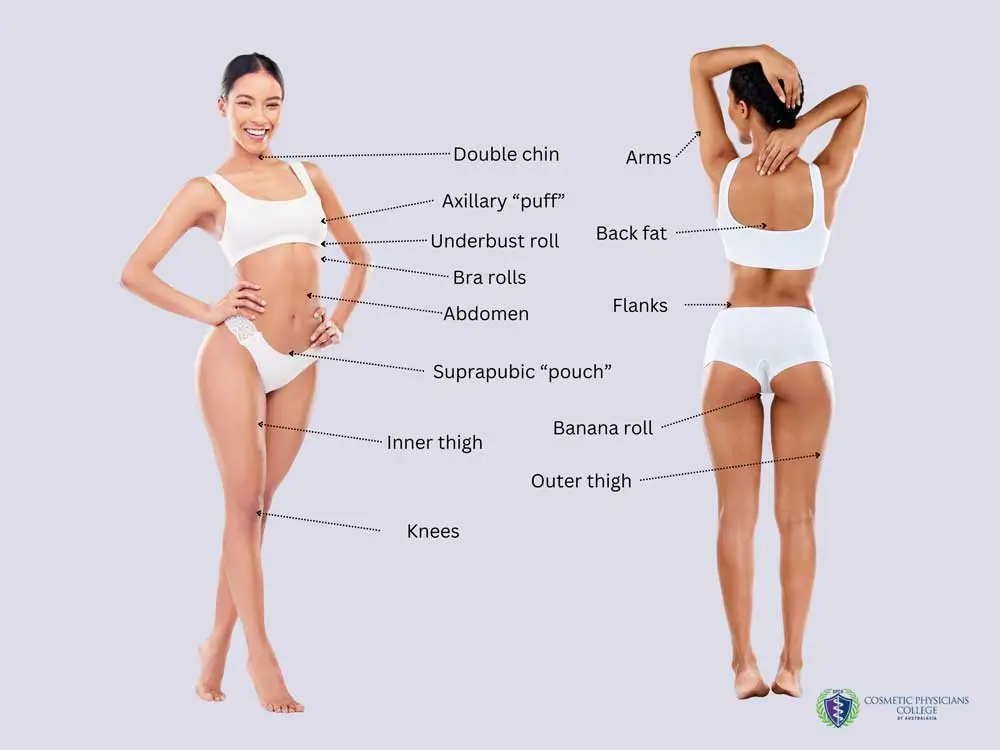
Treatment areas are selected based on the distribution and volume of excess fat, as well as the suitability of the tissue for vacuum applicators. Cryolipolysis uses controlled cooling to reduce localised fat deposits without damaging surrounding tissues. One pilot study even showed that 83% of treated sites on the arms experienced a significant fat reduction just eight weeks after a single session.
These are the areas that can be treated:
- Abdomen and flanks (commonly referred to as love handles)
- Inner and outer thighs
- Knees
- Upper arms
- Submental area (under the chin)
- Submandibular area below the jawline
- Back and bra-line area
- Fat underneath the buttock rolls (banana rolls)
- Lower back and waist
What to expect during a session
During a typical session of cryolipolysis for fat reduction, a gel pad and applicator are applied to the targeted part of your body. The fat freezing technology then cools the tissue in a controlled manner. Patients may initially feel intense cold and mild tugging, but this usually subsides as the area becomes numb. Most sessions last between 35 to 60 minutes, depending on the treatment area.
Mild swelling, bruising, or tenderness may be experienced for a few days after treatment, but these are generally self-limiting. As the body gradually processes and eliminates the affected fat cells, visible contour changes typically emerge over the following weeks.
Cryolipolysis vs. other fat reduction options
Among various fat reduction procedures that use heat, cooling, or ultrasound techniques, cryolipolysis stands out due to its non-invasive nature. It also has a strong safety record.
Studies have confirmed that cryolipolysis does not affect blood lipid levels or liver function, even when multiple areas are treated on the same day.
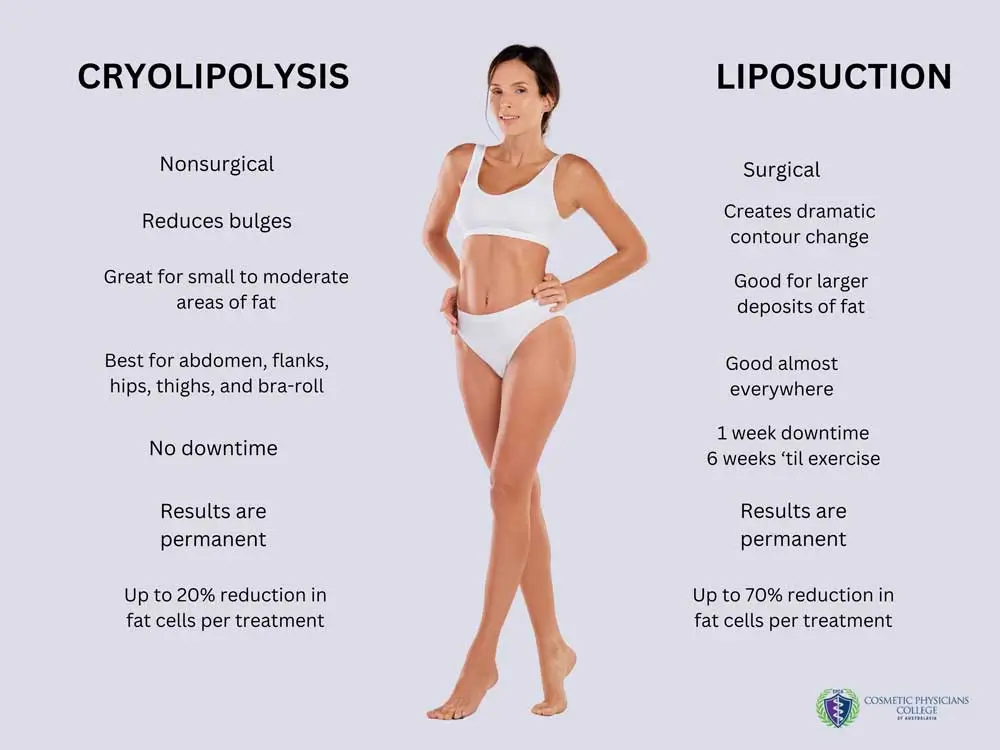
Unlike surgical interventions such as liposuction, fat freezing cryolipolysis involves no incisions, anaesthesia, or significant downtime. Additionally, this non-surgical fat treatment targets only fat cells, leaving the skin and surrounding tissue unaffected.
In comparison, injectable treatments like fat-dissolving injections and dietary supplements are often marketed for fat loss, but their efficacy and safety can vary significantly. While liposuction offers immediate results, fat may be reduced more evenly with cryolipolysis due to its applicator design. Patients concerned about loose skin post-treatment may also consider adjunctive skin tightening therapies to complement fat reduction outcomes.
Risks and side effects of cryolipolysis
Common side effects may include transient local redness, bruising, and tingling in the skin in the treatment areas. But these are expected to subside. The area becomes numb immediately after treatment and is expected to subside.
Rarely, complications such as paradoxical adipose hyperplasia can occur. This is where the fat in the treated area becomes firmer and larger instead of shrinking. Other rare risks include paroxysmal cold haemoglobinuria, which is an even rarer autoimmune disorder, though its occurrence is extremely limited.
Typically, sensory deficits will improve within a month. The effect on peripheral nerves has been investigated and has failed to show permanent detrimental results. There were no serious, long-lasting side effects encountered during six months of follow-up.
The safety and efficacy of cryolipolysis have been supported by various clinical studies. It also received clearance from regulatory bodies such as the Therapeutic Goods Administration. Despite its effectiveness, patients are encouraged to maintain a healthy lifestyle post-procedure, as fat in our bodies can still expand in untreated areas.
It’s important to note that while cryolipolysis fat freezing can remove stubborn fat, it does not address fat growth elsewhere. Also, it does not treat the fat bulge caused by deeper visceral fat.
While the cryolipolysis procedure will NOT help you lose weight, it can help you lose unwanted fat cells, producing a slimmer appearance.
How to choose a skin healthcare professional
Cryolipolysis treatment can be performed by a plastic surgeon, cosmetic surgeon, or other licenced skin healthcare professional. Clinicians should have appropriate training and a thorough understanding of body contouring principles. Additionally, they should operate in a setting that adheres to clinical safety standards and use TGA-approved equipment.
In Australia, several devices are currently approved by the Therapeutic Goods Administration (TGA) for fat freezing cryolipolysis treatments: CoolShaping2 (ARTG No. 371276), Coolslimming 360 (ARTG ID #340674), and CoolSculpting Elite, and Cryodefine (Micool).
If a clinic does not clearly specify that it uses one of these TGA-approved technologies, it may be prudent to exercise caution. Use of unapproved devices suggests they have not met the regulatory standards for safety and efficacy required by the TGA.
Patients should also be assessed individually to determine whether they are suitable candidates for the non-surgical fat treatment. A reputable provider will set realistic expectations and discuss possible side effects. The goal is not just to remove stubborn pockets of fat, but to do so safely, ethically, and effectively.
Our CPCA-certified doctors are highly qualified, experienced, and ethical practitioners.
“Cryolipolysis is a non-surgical cosmetic procedure that should only be performed by trained professionals. While it is not a prescription treatment in Australia, it must be administered by a suitably qualified provider following a proper assessment for safety and suitability. For your safety, the CPCA advises that you ensure a face-to-face consultation with a doctor appropriately trained in cosmetic medicine, such as a CPCA member. The doctor may delegate the procedure to a trained practitioner under their supervision. Clinics operating under medical oversight provide the highest standard of care and safety.”
Please contact us by completing the enquiry form below
Frequently asked questions about cryolipolysis
How many sessions are typically needed to remove stubborn pockets of fat?
The number of cryolipolysis sessions required depends on individual goals, the size of the treatment area, and how the body responds. Typically, patients need between one to three sessions per targeted area. Some people see noticeable improvements after just one session, while others may benefit from follow-up treatments spaced a few weeks apart to achieve optimal results. A consultation with a qualified provider can help determine the best treatment plan based on body type and desired outcomes.
How long does it take to see results from the effects of CoolSculpting?
Results from CoolSculpting aren’t immediate, as the body gradually eliminates the frozen fat cells over time. Many individuals start to notice changes as early as three weeks after treatment, with the most dramatic results typically visible after two to three months. The body can continue to flush out fat cells for up to six months following a session. Patience is key, but the gradual improvement contributes to a more natural-looking fat reduction.
Who is an ideal candidate for this non-surgical fat treatment?
Cryolipolysis is best suited for individuals who are near their ideal body weight but struggle with localised fat deposits that are resistant to diet and exercise. It is not intended for significant weight loss or for those who are obese. Ideal candidates are healthy adults with good skin elasticity and realistic expectations about the results. Since the treatment targets specific areas, it’s especially effective for places like the abdomen, flanks, thighs, and under the chin.
Can cryolipolysis achieve even fat reduction across treated areas?
Yes, when performed by a skilled practitioner, cryolipolysis can provide even and consistent fat reduction. The technology is designed to contour the body by targeting fat cells uniformly within the treatment applicator’s coverage area. However, outcomes can vary depending on the technique and experience of the provider, so choosing a reputable clinic is crucial. Proper assessment and treatment planning help ensure symmetrical, smooth, and natural-looking results.
Is there any downtime after undergoing fat freezing cryolipolysis?
One of the key advantages of cryolipolysis is that it requires little to no downtime. Most individuals can resume their normal daily activities, including work and exercise, immediately after the procedure. Some temporary side effects, such as mild soreness, redness, or tingling in the treated area, are common but typically resolve within a few days. This makes it a convenient option for those with busy lifestyles looking for non-invasive body contouring.
How long do the results last, and can fat return over time?
The results of cryolipolysis are long-lasting because the treated fat cells are permanently destroyed and eliminated from the body. However, it’s important to maintain a stable weight through a healthy lifestyle, as remaining fat cells in untreated areas can still expand with weight gain. While the eliminated fat cells won’t regenerate, new fat accumulation is possible if calorie intake exceeds expenditure. With proper diet and exercise, most people enjoy lasting results and a more sculpted appearance.
How much does it cost?
The cost of cryolipolysis varies depending on several factors, including the size and number of areas being treated, the number of sessions required, and the location and expertise of the clinic. On average, a single CoolSculpting session can range from $600 to $1,200 per area. Larger treatment areas like the abdomen may be more expensive, while smaller zones like under the chin might be on the lower end. Many clinics offer package deals or discounts for multiple sessions, so it’s worth consulting with a provider to get a personalised quote based on your goals. While it’s an investment, many people find the long-lasting results justify the cost compared to other non-invasive or surgical alternatives.
Are results permanent?
Yes, the results from cryolipolysis are considered permanent in the treated areas. The procedure works by freezing and destroying fat cells, which are then naturally eliminated by the body and do not regenerate. However, it’s important to note that while those specific fat cells are gone for good, the remaining fat cells in the body can still expand if a person gains weight. This means maintaining a stable weight through a balanced diet and regular exercise is essential to preserving results. In short, the fat removed won’t come back, but new fat can accumulate if healthy habits aren’t maintained.