Skin Tightening Treatments
Skin tightening treatments are non-surgical methods used to address loose or sagging areas of the face and body. They rely on controlled energy, such as radiofrequency, ultrasound, or laser, to heat deeper skin layers. This heat activates collagen and elastin production, which gradually improves firmness, texture, and lift. Most treatments involve little recovery time, with results appearing over a series of sessions. Outcomes differ by skin type, age, and treatment method. Clinical evaluation determines which option best suits individual skin concerns.
Loose or sagging skin, particularly in areas such as the face, neck, and jawline, represents one of the most visible signs of ageing. Multiple causes contribute to this condition. Natural reduction of collagen production begins as early as the mid-twenties and accelerates with advancing age.
Chronic sun exposure leads to breakdown of elastin fibres, further reducing resilience. Weight fluctuations, particularly rapid loss after periods of gain, can stretch the skin beyond its natural recoil. Genetic predisposition also plays a substantial role, influencing baseline collagen density and repair capacity.
The consequences extend beyond physical appearance, with many individuals reporting diminished confidence and self-image. In response to these challenges, modern dermatology and aesthetic medicine have introduced structured approaches that do not require surgical cutting or invasive lifting.
Radiofrequency, ultrasound, and laser treatments all act by delivering controlled energy into tissues, stimulating cellular repair pathways, reorganising dermal fibres, and encouraging gradual renewal of surface texture. During clinical assessment, practitioners evaluate thickness, elasticity, and distribution of laxity across different skin layers, then design a plan aligned with patient-specific biological conditions.
The following guide describes the principles behind each technology, how skin responds to stimulation, and what can realistically be expected before and after treatment. It also provides information on how to weigh the relative advantages of different methods
What is skin tightening treatment?
Skin tightening treatment describes a category of non-surgical procedures that employ devices to deliver controlled energy beneath the surface of the skin. These devices utilise ultrasound waves, radiofrequency energy, or light-based methods to create targeted heating within the dermis and supporting tissue. The depth of penetration depends on the technology employed.
Ultrasound, for example, can reach as deep as 4.5 millimetres, stimulating layers that normally respond only to surgical intervention. The heating effect initiates coagulation of collagen fibres, contraction of tissues, and long-term remodelling of extracellular structure. This process supports gradual tightening and lifting of affected areas. Such methods are applied to numerous anatomical regions:
- Sagging skin along the lower face and jowls
- Drooping brows and upper eyelids that contribute to tired expression
- Loose tissue beneath the chin and across the neck
- Wrinkling on the knees and upper arms
- Creasing across the chest, often related to sun exposure
- Stretch marks produced by pregnancy or rapid weight change
By targeting these regions, energy-based skin tightening broadens the range of non-surgical interventions available for both cosmetic and quality-of-life concerns.
How does skin tightening work?
The effectiveness of skin tightening treatments lies in their ability to trigger natural repair mechanisms within the body. As skin ages, collagen and elastin fibres lose integrity, becoming disorganised and sparse. Fibroblasts, the cells responsible for producing structural proteins, become less active with time and environmental stress. The result is visible sagging, fine lines, and reduced elasticity.
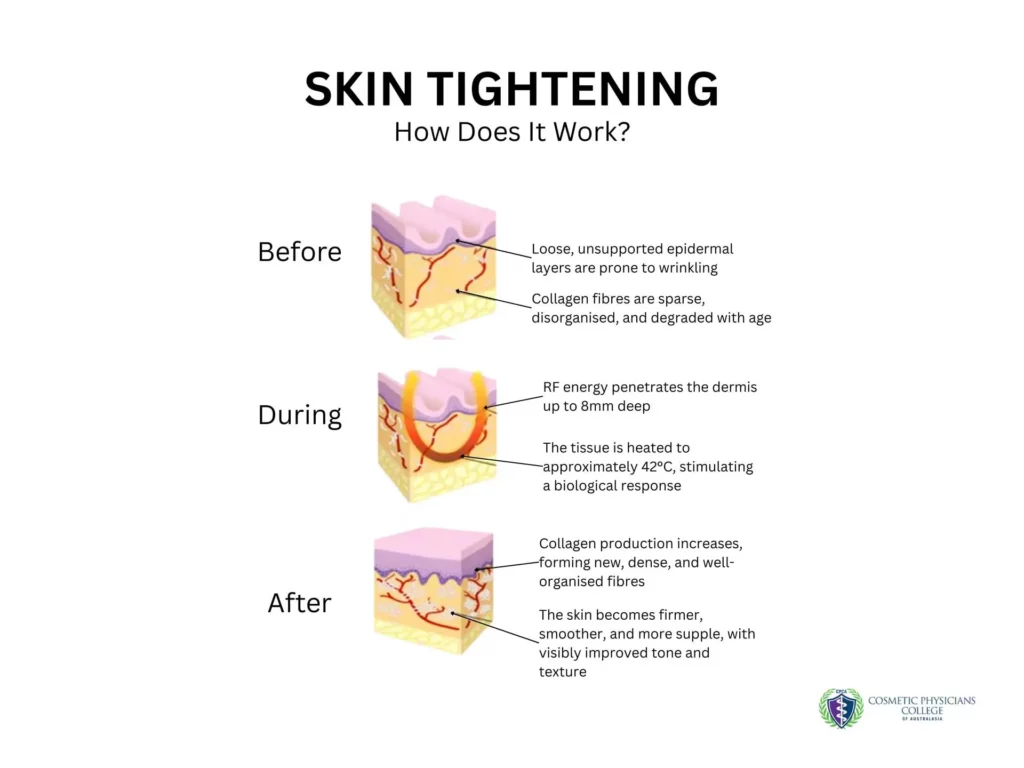
Energy-based devices reverse aspects of this process by stimulating controlled injury. When heat is applied to targeted depths, the body interprets the exposure as a wound and initiates healing. Fibroblasts increase activity, laying down new collagen and reinforcing elastin. Over subsequent weeks and months, fibres realign and strengthen, gradually producing a more compact and resilient dermal structure. Importantly, most modern devices are calibrated to protect the epidermis, or outer layer, preserving the skin’s barrier function while concentrating energy deeper within the dermis and subcutaneous tissue.
As collagen accumulates and remodels, surface appearance improves. Laxity decreases, texture smooths, and contours become more defined. Noticeable benefits occur most predictably in individuals with mild to moderate sagging, where structural support remains partially intact.
Outcomes vary with age, skin health, and number of treatments. For those not suitable for surgical intervention, energy-based procedures provide non-invasive alternatives that activate cellular pathways and reinforce dermal architecture. In addition to correcting existing issues, these approaches also slow progression of laxity by stimulating collagen maintenance systems.
Risks and side effects of skin tightening
Although considered safe when performed with regulated devices and proper technique, skin tightening treatments carry potential risks and side effects. Understanding these outcomes helps both patients and clinicians make informed decisions about suitability.
Common side effects
Responses differ by individual biology and technology applied, but frequent observations include:
- Redness or swelling immediately following radiofrequency or ultrasound procedures
- Mild tingling or temporary discomfort during or shortly after sessions
- Localised bruising, particularly in delicate areas exposed to needling or resurfacing
- Crusting, scabbing, or flaking following laser or resurfacing methods
- Dryness or peeling of the epidermis as tissue renews
- Pigmentation irregularities such as hyperpigmentation or hypopigmentation, especially in darker skin tones
- Short-term numbness, more common with procedures using heat-based stimulation
Potential risks to consider
While uncommon, complications may arise and require awareness:
- Burns or blisters when heat-based technologies are applied incorrectly or settings are too aggressive
- Permanent scarring, particularly in individuals prone to keloid formation
- Infections, if micro-injuries are exposed without proper post-care
- Damage to deeper tissue layers in rare cases, with unregulated devices or poor operator training
- Abnormal healing responses when pre-existing cellular damage is overstimulated
- Exacerbation of chronic conditions such as eczema or rosacea
- Risks heightened when procedures are performed over unrecognised malignant or pre-malignant lesions
Different types of skin tightening treatments using energy-based devices
Energy-based technologies form the foundation of non-surgical skin tightening. By applying heat or sound energy into the skin, they stimulate collagen synthesis and reorganisation, which in turn improves firmness, texture, and elasticity. Three categories dominate current practice: radiofrequency, laser, and ultrasound.
Radiofrequency
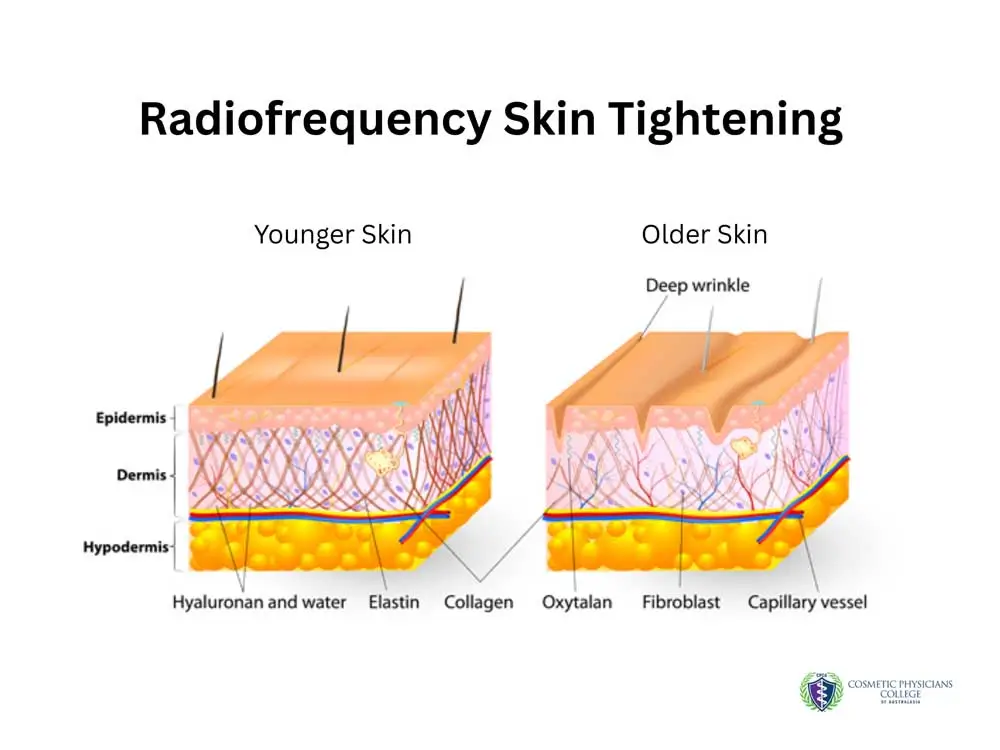
Radiofrequency uses electromagnetic waves to heat the dermis while leaving the epidermis intact. The heat stimulates fibroblast cells to increase collagen and elastin production, leading to gradual tightening. This approach is particularly effective for areas that show laxity due to ageing or weight fluctuations. Radiofrequency can be applied to both face and body and is widely considered safe for all skin tones.
Advantages:
- Broad applicability across skin tones
- Minimal discomfort during procedure
- No associated risk of pigmentation change
Disadvantages:
- Multiple sessions are typically necessary
- Maintenance treatments required to sustain outcomes
Laser
Laser skin tightening utilises focused light energy to heat the dermis while preserving the outer layers. This encourages the skin to produce new collagen while also resurfacing the texture of the upper layer. It targets loose skin, improves tone, and refines pores. It can also address certain skin conditions, such as sun damage or uneven pigmentation.
Laser treatments are ideal for those who wish to target both laxity and surface-level imperfections. It works particularly well on the skin on the face that shows early signs of ageing, such as fine lines and pigmentation.
However, those with darker skin types or sensitive skin should consult a clinician carefully, as lasers can pose a higher risk of side effects in these cases.
Advantages:
- Effective for texture improvement
- Can also target pigmentation and superficial skin concerns
Disadvantages:
- Not always suitable for darker skin tones
- May cause redness, swelling, or peeling
Ultrasound
Ultrasound-based tightening, particularly High-Intensity Focused Ultrasound (HIFU), uses sound waves to reach deep beneath the skin, targeting foundational layers usually addressed in surgical procedures.
This energy heats the tissue, creating micro-injuries that stimulate a wound-healing response, which leads to new collagen formation and tissue tightening over time. Fewer sessions are usually required, with results continuing to improve gradually over several months.
Ultrasound skin tightening is well-suited for people with moderate sagging skin, particularly those who want to redefine contours such as the jawline, brow, and neck.
It’s a great choice for individuals who prefer a single-session approach and are comfortable waiting several weeks to see progressive changes.
Advantages:
- Targets deeper tissue layers
- Results continue to improve over several months
- Requires fewer sessions
Disadvantages:
- Temporary tingling or discomfort during or after sessions
- Variation in results depending on age, baseline skin quality, and biological response
How to choose the right skin tightening treatment for your needs
Selecting from the variety of skin treatments available depends on several factors. Each person’s anatomy, concerns, and goals must be considered to find the most effective method to tighten skin and help restore its firmness.
Age
Collagen levels decline steadily after early adulthood, reducing responsiveness to stimulation. Younger individuals, particularly in their 30s or early 40s, often experience faster and more noticeable improvement. Older patients may require combination approaches or repeated treatments to maintain benefit.
Severity
The severity of sagging skin or loose skin dictates the depth and intensity of treatment required. Mild laxity can often be addressed with surface-level modalities like RF or superficial lasers. Moderate cases may benefit more from high-intensity focused ultrasound (HIFU) or deeper fractional lasers. Severe laxity may need a multi-modal approach or surgical referral if non-surgical treatments prove insufficient.
Skin type
Different skin conditions and tones respond differently to each modality. RF is considered safe for all skin types, while certain lasers can trigger hyperpigmentation in darker skin. Understanding your Fitzpatrick skin type can guide safe and effective treatment selection. Those with sensitive or reactive skin may lean towards ultrasound or RF to reduce the risk of irritation.
Tolerance for downtime
Each treatment varies in recovery expectations. If downtime is a concern, RF and HIFU are preferred as they allow for an immediate return to routine. Laser treatments, depending on their depth, may require several days of recovery due to redness or peeling. It’s crucial to balance desired results with practical considerations around work, social events, and travel.
How to choose a qualified practitioner?
Selecting a qualified practitioner is essential for safe, effective outcomes in non-surgical cosmetic treatments.
A reputable professional should have formal medical training and hands-on experience in treating the skin through various non-invasive and surgical methods. This is particularly important when procedures are designed to penetrate the skin or stimulate the deeper skin layers.
The Cosmetic Physicians College of Australasia (CPCA) accredits doctors with training in cosmetic medicine. CPCA-accredited professionals have training specific to cosmetic medicine and follow established clinical guidelines.
Accreditation indicates that a doctor has met certain educational and clinical standards relevant to the field. This may be one factor to consider when comparing practitioners for skin treatments.
Also, practitioners should use TGA-approved devices for procedures such as RF skin tightening, laser skin tightening, and ultrasound treatments. This approval indicates the technology has been assessed for quality, safety, and performance.
Unapproved devices can increase the risk of complications, such as burns or long-term damage to skin cells.
Before treatment begins, an experienced practitioner will examine your concerns, such as loose skin on the face, wrinkles and sagging skin, or general loss of elasticity in certain areas of the body.
During this process, look for transparency. A credible practitioner will explain expected outcomes, potential side effects, treatment intervals, and how to protect your skin post-treatment.
They should also provide clinical photographs of previous patients and disclose which methods they use to tighten your skin or lift sagging skin.
Lastly, ongoing support is part of professional care. This includes follow-up appointments and advice to maintain firm skin, support enhancing skin texture, and help prevent skin ageing over time.
“Skin tightening procedures, including treatments that use radiofrequency (RF), ultrasound, or other energy-based devices, are considered regulated medical services in Australia. For your safety, the Cosmetic Physicians College of Australasia (CPCA) strongly advises that all patients undergo a face-to-face consultation with a doctor who is appropriately trained in cosmetic medicine, such as a CPCA member. The doctor will assess your individual needs and determine if the treatment is suitable for you. In some cases, the doctor may choose to delegate the procedure to a qualified nurse or practitioner who operates under their direct supervision. It is important to note that only a doctor is authorised to prescribe or approve any medical aspects of your treatment. Ensuring that your provider follows these standards helps protect your health and ensures the best possible results.”
Please contact us by completing the enquiry form below
Frequently asked questions about skin tightening treatments
Is skin tightening treatment painful?
Most non-surgical treatments are well-tolerated. Radiofrequency and ultrasound usually cause a warming or tingling sensation. Laser treatments may cause mild discomfort, similar to a rubber band snap, but this is often managed with cooling or numbing gel. There’s no need for anaesthesia in standard procedures.
How many sessions do I need?
The number of sessions depends on the device and the severity of the loose skin. Some ultrasound treatments require only one session, while RF and laser may need 3 to 6 sessions spaced a few weeks apart. Maintenance sessions may be needed every 6 to 12 months to support collagen in the skin and sustain results.
Are the results permanent?
The results are long-lasting but not permanent. Energy-based treatments help improve skin firmness by stimulating collagen, but natural ageing continues. Over time, maintenance treatments are needed for enhancing skin elasticity and preventing the return of sagging skin.
How long do results last?
Results can last between 6 months to 2 years. The longevity depends on your age, skin quality, lifestyle, and the treatment used. With regular maintenance and proper skincare, you can extend the effects and continue to improve overall skin firmness.
What does the treatment involve, and what should I expect?
Non-surgical skin tightening treatments are truly “lunch time procedures”, walk in and walk out, with virtually zero recovery or downtime. A handpiece is guided across the skin surface, firing pulses of energy into the tissues below the skin, thereby mostly sparing any skin surface effects. There may be some mild redness and minimal swelling, which settles within hours. Rarely, there may be some side effects of bruising and nerve damage, such as numbness, which may take weeks to recover from. The procedure is well tolerated without the need for any significant pain relief.
Usually, only 1-2 treatment sessions are required to achieve results, depending on the severity of laxity and sagging. Skin tightening treatments are ideally suited to those individuals with only mild to moderate skin laxity, who are not yet ready for a surgical lift, or those who want to prevent future saggy skin and droop. The tightening and lifting effect starts to become visible after 3 months, and continues to improve over the next 6 – 12 months.
Ideally, maintenance treatments can then be done every 12 – 24 months.
Why are energy-based device treatments considered better for skin tightening?
Energy-based treatments are preferred because they stimulate natural collagen production without surgery or significant downtime. They offer a targeted, controlled approach to lifting and tightening the skin on the face and body. They also address a variety of skin concerns while keeping the skin’s surface intact.
Can I wear makeup after a skin tightening treatment?
Yes, but it depends on the treatment. After RF and ultrasound, you can typically apply makeup the same day. For laser procedures, it’s best to wait 24 to 48 hours, as the skin may be red or sensitive. Always follow the aftercare instructions given by your practitioner to avoid irritation or delayed healing.
Who is not a good candidate for energy-based skin tightening?
People with severe sagging skin or excessive laxity may not achieve their desired results with non-invasive options alone. Pregnant individuals, those with active skin infections, or certain medical implants (like pacemakers) may also be advised against these treatments. A consultation is important to assess suitability based on your health and skin condition.
Is skin tightening safe for all skin tones?
Radiofrequency and ultrasound treatments are safe for all skin tones. Some lasers may carry a higher risk of pigmentation changes in darker skin types. Choosing the right device and experienced provider helps reduce risk and promote safe, effective results across diverse skin conditions.
Can I combine skin tightening with other treatments?
Yes. Many people combine energy-based skin tightening with injectables, microneedling, or resurfacing treatments. This combination can further improve skin texture, tone, and elasticity. Your practitioner can create a personalised treatment plan based on your goals and skin needs.