Tattoo Reduction & Removal Treatment
Tattoo removal treatments are designed to fade or eliminate unwanted ink from the skin over time. These methods work by targeting the layers of skin where ink is stored, using techniques that either break down the pigment or physically remove the affected skin. As the area heals, the tattoo fades gradually across multiple sessions.
Most treatments involve some recovery, with temporary redness, sensitivity, or scabbing as part of the skin’s natural response. Some tattoos fade more quickly than others, while complete removal may take longer or involve a combination of techniques. A consultation helps determine the most suitable approach for your goals, your skin, and the specific tattoo you want to change.
The decision to remove or reduce a tattoo requires structured planning, realistic expectations, and an understanding of available methods. Motivations vary widely: occupational requirements, cultural adjustments, or dissatisfaction with earlier choices. Whatever the reason, the clinical demand for reliable treatments continues to increase.
Techniques range from topical agents with limited effectiveness to advanced laser systems capable of fragmenting pigment particles. Each method differs in its efficiency, its ability to stimulate immune clearance, and its impact on surrounding tissue.
Multiple sessions are generally required, with outcomes influenced by pigment colour, ink depth, anatomical location, and the application technique used by the tattoo artist.
Proper preparation before each session, adherence to aftercare instructions, and consistency throughout the treatment course are vital for safe and predictable results. It is also essential to maintain realistic expectations: some tattoos fade substantially, others clear entirely, while certain designs persist despite repeated treatment.
Whether the tattoo has been present for decades or was applied recently, clear understanding of the biological process ensures more reliable results and minimises risks during the course of removal or reduction.
What’s the difference between tattoo removal vs. reduction?
Tattoo removal and tattoo reduction are related but represent separate clinical goals. Removal seeks complete clearance of the existing tattoo, while reduction aims only to lighten the pigment enough to allow a cover-up or redesign.
Both require delivery by trained practitioners with appropriate medical knowledge, as precision and safety remain central. In modern practice, lasers provide the primary tool for both outcomes, using highly focused light to disrupt ink.
Choosing between removal and reduction depends on whether the individual wishes to eliminate the tattoo entirely or simply reduce visibility to support a new design layered over the old. Although the technology applied is often identical, the number of sessions needed differs.
Reduction typically requires fewer treatments, while full removal involves more extensive scheduling. Session numbers are influenced by several factors, including the specific ink colours, the depth at which pigment resides, the individual’s skin type, and the anatomical site of the tattoo.
How does tattoo removal work?
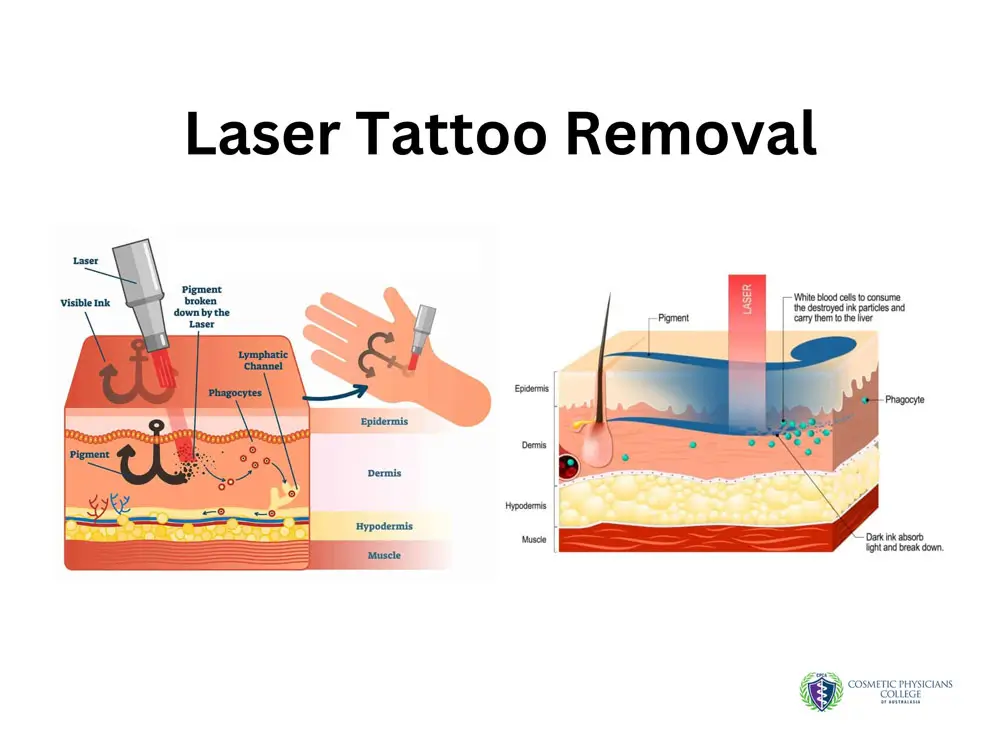
Tattoo removal operates by fragmenting pigment particles embedded in the dermis with concentrated pulses of laser light.
Each burst of energy targets specific wavelengths that correspond to ink colours, including both darker shades and lighter tones. Once disrupted, the pigment particles become small enough for the immune system to clear gradually.
Treatment parameters are adjusted to the size and colour of the tattoo, the patient’s skin tone, and the characteristics of the pigment.
Different laser platforms are selected to match distinct colour ranges, with certain devices better suited for particular hues. The optimal system is identified following professional assessment.
While safe when conducted by trained practitioners using regulated technology, the process is rarely immediate. Multiple sessions are typically required, and larger or more intricate tattoos demand more complex treatment planning.
Different types of treatments for removing tattoos
Getting a tattoo is often a personal decision, but circumstances and preferences can change over time. As a result, many individuals explore options to remove tattoos that no longer align with their current image or lifestyle. Before selecting a method, it is important to understand the available options, the associated tattoo removal cost, and how each process works to help achieve the best results.
Laser removal
Tattoo ink particles are deposited within the dermis and remain visible because they are too large for immune cells to clear. Laser devices address this by delivering high-intensity light pulses that fragment the particles into smaller sizes.
Once shattered, the pigment becomes accessible to macrophages, which gradually process and remove the debris.
Q-Switched Nd:YAG lasers remain a mainstay in this field, while newer picosecond lasers show efficiency in disrupting stubborn pigments. The Q-Switched Ruby has historical use but can cause greater collateral tissue damage compared with newer systems.
Although lasers remain the most precise method, results are rarely immediate. Most tattoos require repeated exposure, and mild discomfort during treatment is a common experience.
Surgical excision
Surgical excision removes the tattoo entirely by cutting out the pigmented skin and closing the wound with sutures. Excision is generally limited to small tattoos because tension and limited skin elasticity restrict the amount of tissue that can be safely removed.
While the benefit lies in immediacy, risks include permanent scarring, irregular contour, and functional limitation in the treated region. Larger tattoos are usually unsuitable for this method.
Dermabrasion
Dermabrasion employs a mechanical device that sands away surface and mid-layers of the skin, gradually disrupting embedded ink.
It is generally considered when laser options are unavailable or contraindicated. The approach tends to work best for lighter skin tones and tattoos that have already faded with time.
While capable of producing clearance, it lacks the precision of laser-based methods. Healing is longer and side effects may include scarring, altered texture, and prolonged sensitivity. For these reasons, dermabrasion is reserved for select cases where other methods cannot be applied safely.
Risks and side effects of tattoo reduction and removal
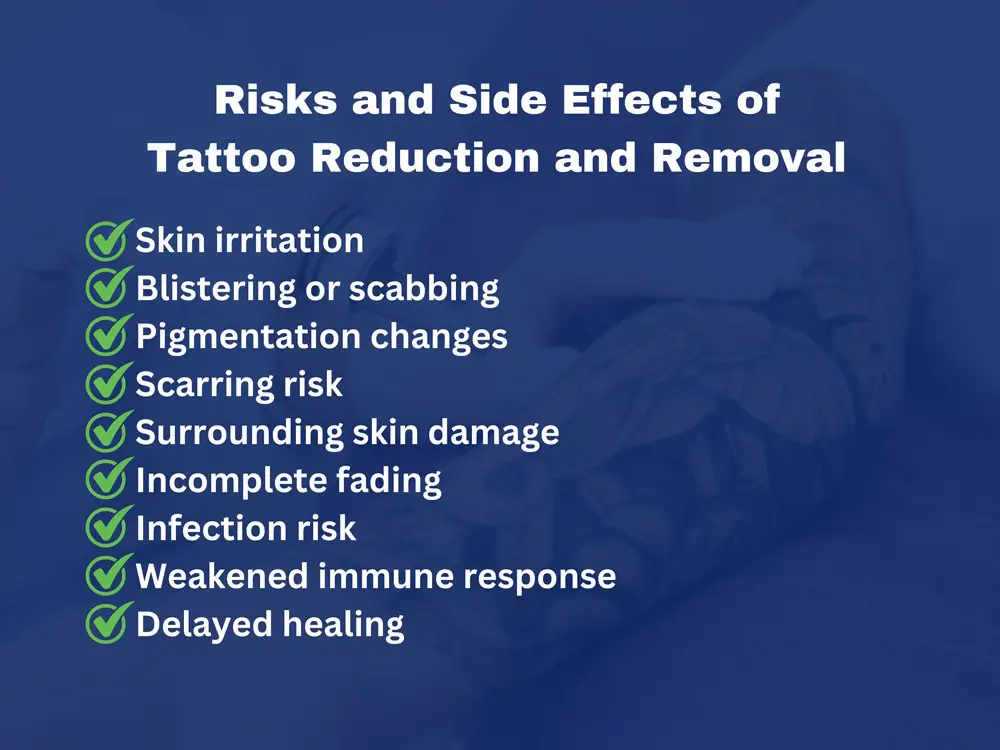
Laser-based tattoo removal and other reduction methods are considered safe when delivered with appropriate equipment and professional oversight, but adverse effects remain possible. Awareness of these outcomes is important for maintaining realistic expectations and for planning effective aftercare.
Potential reactions include:
Redness, swelling, or itching in the treated region
Formation of blisters or scabs as part of normal healing
Temporary or permanent alterations in skin pigmentation
Risk of scarring or irregular surface texture, especially if healing tissue is disturbed
Accidental damage to surrounding skin when treatment is applied incorrectly
Incomplete fading of pigment, depending on colour, depth, and skin type
Infection risk if hygiene protocols are not followed
Slower clearance in individuals with weaker immune response
Delayed recovery due to recent sun exposure or tanning of the skin
These issues highlight the need for professional treatment, adherence to aftercare instructions, and careful monitoring of the healing process.
Aftercare tips for better healing
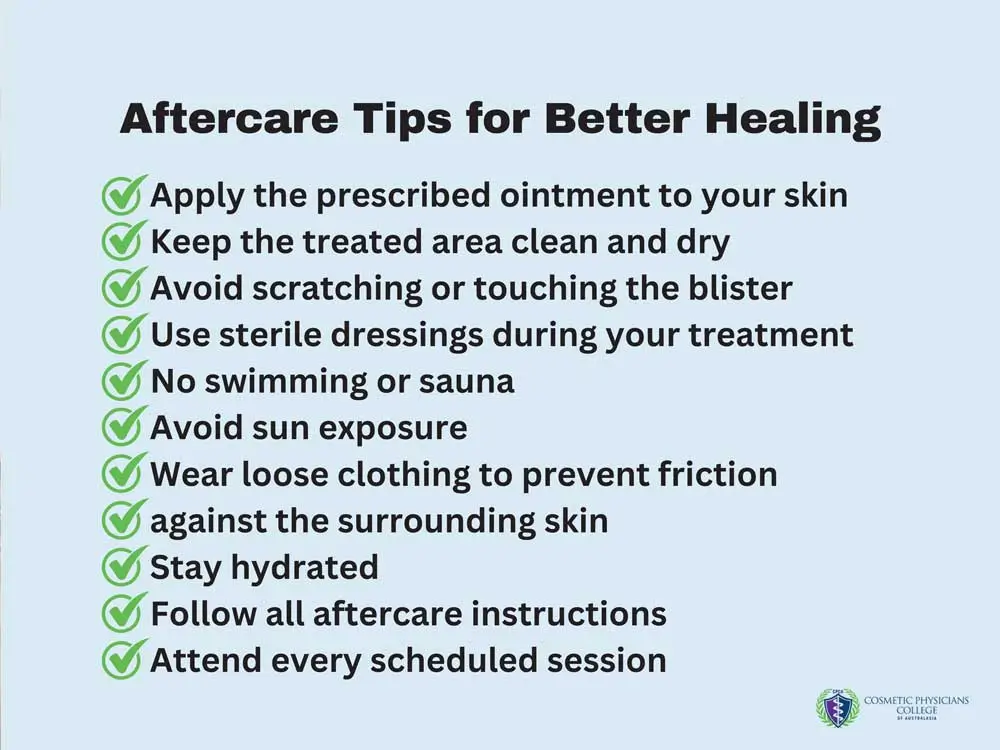
Appropriate aftercare supports healing and lowers the chance of complications following tattoo reduction or removal. The following measures are widely recommended:
- Apply topical ointments or dressings exactly as instructed
- Keep the treated skin clean and dry during the first days of recovery
- Avoid scratching, rubbing, or removing blisters and scabs prematurely
- Use sterile coverings if directed as part of the treatment plan
- Refrain from swimming, soaking, or activities that cause heavy sweating
- Protect the treated region from direct sunlight throughout the healing phase
- Wear loose garments to reduce friction and irritation at the site
- Maintain hydration, balanced nutrition, and adequate rest to support immune function
- Adhere strictly to all professional aftercare instructions provided
- Attend scheduled sessions consistently, as multiple treatments are often required
“Tattoo reduction and removal treatments are typically performed using medical-grade lasers. These are regulated procedures in Australia and should only be administered under appropriate medical oversight. The Cosmetic Physicians College of Australasia (CPCA) advises that individuals seeking laser tattoo removal first have a face-to-face consultation with a doctor trained in cosmetic medicine, such as a CPCA member. During this consultation, the doctor will evaluate your skin type, tattoo characteristics, and medical history to determine the safest and most effective treatment approach. While the doctor may delegate the procedure to a suitably trained practitioner or nurse, this must be done under their supervision. As with all medical-grade aesthetic procedures, only a doctor is legally authorised to prescribe any required medications or manage potential side effects. Choosing a qualified and medically supervised provider helps ensure your safety and maximises treatment success.”
Please contact us by completing the enquiry form below
Frequently asked questions about tattoo reduction & removal
Can all tattoos be completely removed?
Not all tattoos can be fully removed, but many can be significantly faded or nearly erased, especially with modern laser tattoo removal. Factors such as ink colour, depth, age of the tattoo, and individual skin characteristics influence the final outcome.
Darker pigments typically respond better, while some colours like green or blue may require additional sessions.
Also, the success of tattoo removal depends on several factors, including skin type, the density and colour of the ink used, and aftercare.
Generally, black tattoos are easier to remove than coloured tattoos. Blues, greens, and purples are more stubborn than are reds, yellows, and oranges. This is because the currently available lasers are absorbed best by black colour.
As a general rule, it takes several treatments to fade a tattoo. For black tattoos, expect between 4 and 10 treatments. The interval between treatments is 8 to 12 weeks. So think in terms of a year for removal. Coloured tattoos will take much longer to fade and sometimes not at all.
How many sessions does tattoo removal usually take?
The number of sessions varies depending on the size, ink depth, colour, and your body’s ability to process the ink fragments. Most people need between 6 to 10 sessions, spaced several weeks apart, for noticeable results. Some tattoos may require fewer or more treatments, especially large tattoos or those with multiple ink layers.
Does tattoo removal hurt more than getting the tattoo?
Yes, it does. Tattoo removal may cause pain or discomfort similar to, or slightly more intense than, getting a tattoo. It feels like a very hot electric shock. Cooling of the skin with ice or cold air can alleviate the discomfort. For smaller tattoos, a local anaesthetic injection (eg xylocaine) will give total pain relief. Sensation varies by individual and treatment area. Most clinics offer topical anaesthetics to reduce discomfort during the procedure. Topical anaesthetics are not that effective.
What is the recovery time after each session?
Recovery typically takes 5 to 10 days, depending on skin sensitivity and how your body reacts. You may experience redness, swelling, or blistering, which usually resolves within a week. Proper aftercare supports healing and lowers the chance of complications.
Is tattoo removal safe for all skin types?
Modern laser therapy has become safer for a wide range of skin types, but risks may vary. People with darker skin tones may need specialised lasers to minimise the risk of pigmentation changes. A thorough tattoo removal consultation helps determine the safest approach for your skin.
How much does tattoo removal cost per session?
The tattoo removal cost per session usually ranges from $150 to $500. Pricing is based on factors like tattoo size, colour complexity, and clinic location. Some clinics offering laser tattoo removal may provide package deals for multiple sessions.
Is tattoo removal covered by insurance?
In most cases, tattoo removal is considered a cosmetic procedure and is not covered by insurance. Exceptions may apply for medical-related tattoo removal, such as those related to trauma or allergic reactions. It is best to check with your provider directly.
Will there be scarring after the treatment?
If treated at the correct settings, there should be zero to minimal skin changes. Also, when performed by an experienced practitioner using proper equipment, tattoo removal uses methods that carry a lower risk of scarring. However, there is still a small chance of permanent skin texture changes. That’s why aftercare is important to avoid post-treatment infection and scarring. Finally, tattoo removal should be carried out by a skilled and licensed medical doctor.
How should I prepare before my tattoo removal session?
Avoid sun exposure, tanning products, and alcohol for at least 24 hours before the day of your treatment. Keep the area clean and hydrated, and follow any specific instructions given during your consultation. Preparation reduces complications and improves results.
How to choose the right practitioner?
Choose a qualified professional with proven experience in effective laser tattoo removal. Ask to see before-and-after images of previous patients, and confirm that the clinic uses medical-grade laser equipment suitable for your skin type. Reading reviews and understanding their safety protocols will also help in making an informed decision. A reputable practitioner reduces risks and improves your overall outcome. CPCA-accredited doctors follow recognised standards in cosmetic procedures and patient care.